Hilton Parkway
Text
More than just a road, Hilton Parkway was inspired by the advice of renowned landscape architect Frederick Law Olmsted, Jr. and is a testament to the transformative investment of the New Deal in Baltimore.
In the 1930s, the Gwynns Falls blocked traffic between the northwestern suburbs and the growing rowhouse neighborhoods along Edmondson Avenue. In his influential 1904 report on the city's park system, Frederick Law Olmsted, Jr. i recommended the development of Hilton Parkway as a scenic path across the landscape.
Support from the New Deal-era Public Works Administration enabled the construction of the parkway in 1938. It included two bridges, the largest of which spanned 390 feet with arches up to 90 feet.
Files
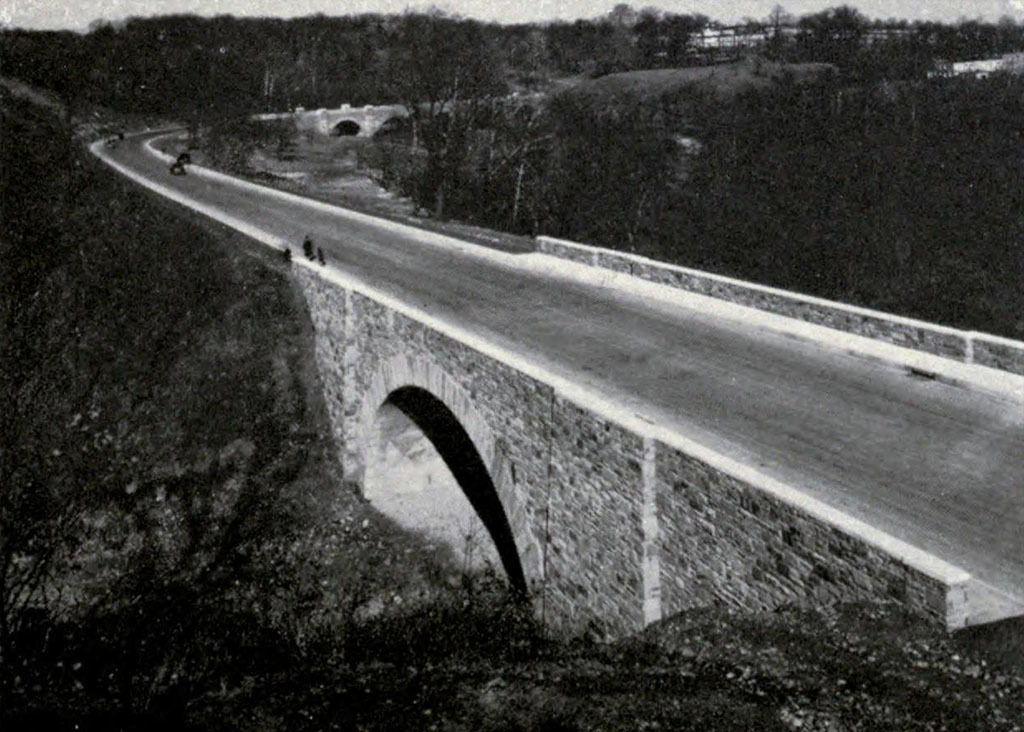
Hilton Parkway Bridges
Source: Internet Archive | Date: c. 1938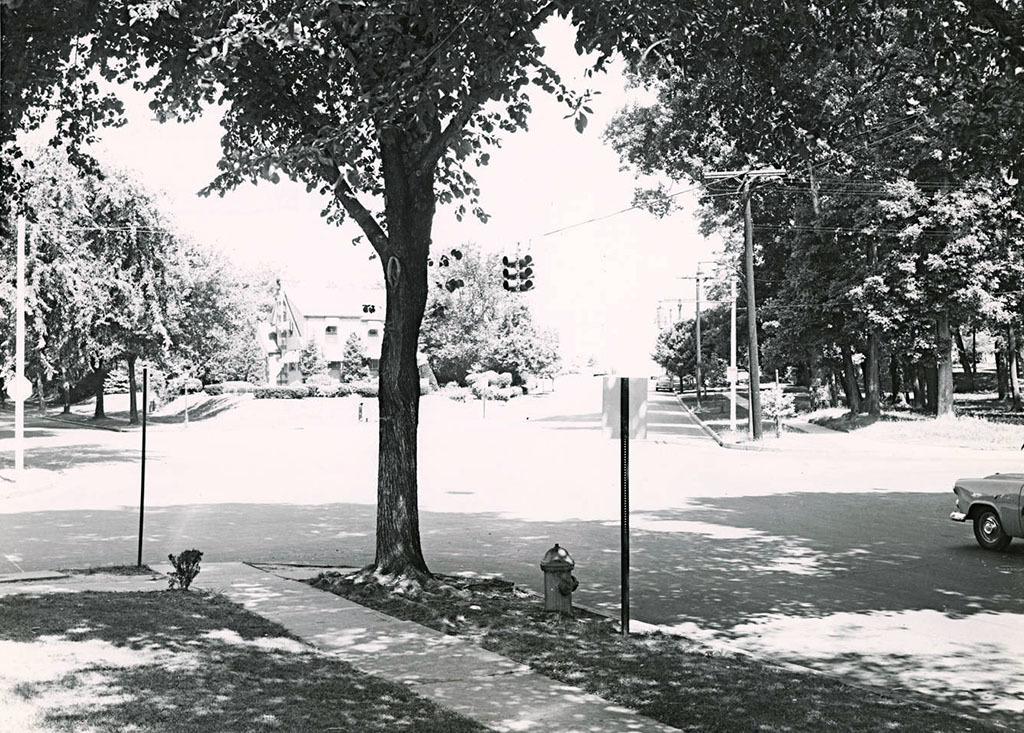
Hilton Street, Dolfield, and Sequoia Avenues
Several streets come together at Dolfield Avenue, Hilton Street, and Sequoia Avenue. | Source: Baltimore Streetcar Museum, bcrc003_040 | Date: 1954 June 8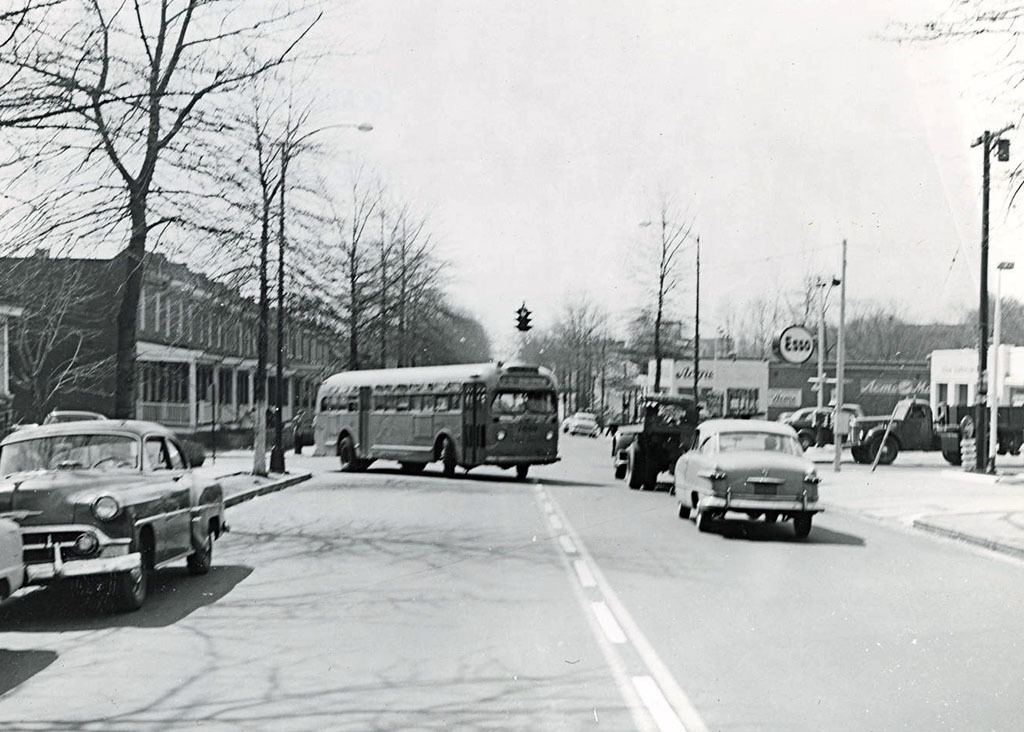
Baltimore and Hilton Streets
A bus turns the corner at Baltimore and Hilton Streets. | Source: Baltimore Streetcar Museum, bcrc001_037 | Date: 1954 March 29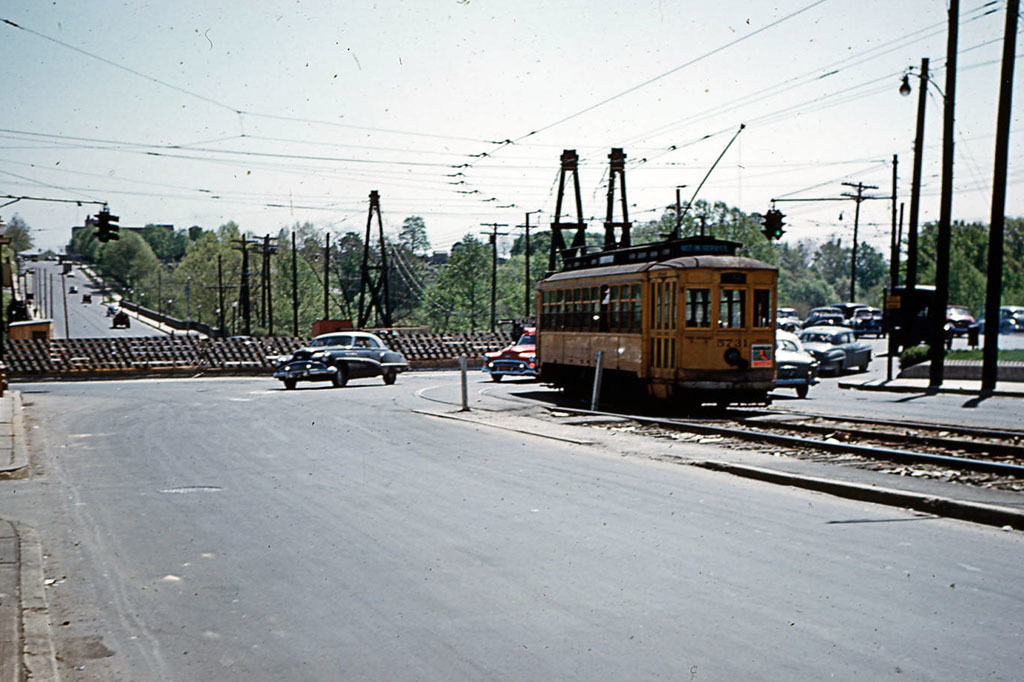
Edmondson Avenue and Hilton Street
A view of Baltimore Transit Car No. 5731 headed into the city at Edmondson Avenue and Hilton Street. | Source: Pennsylvania Trolley Museum | Date: 1952 May 1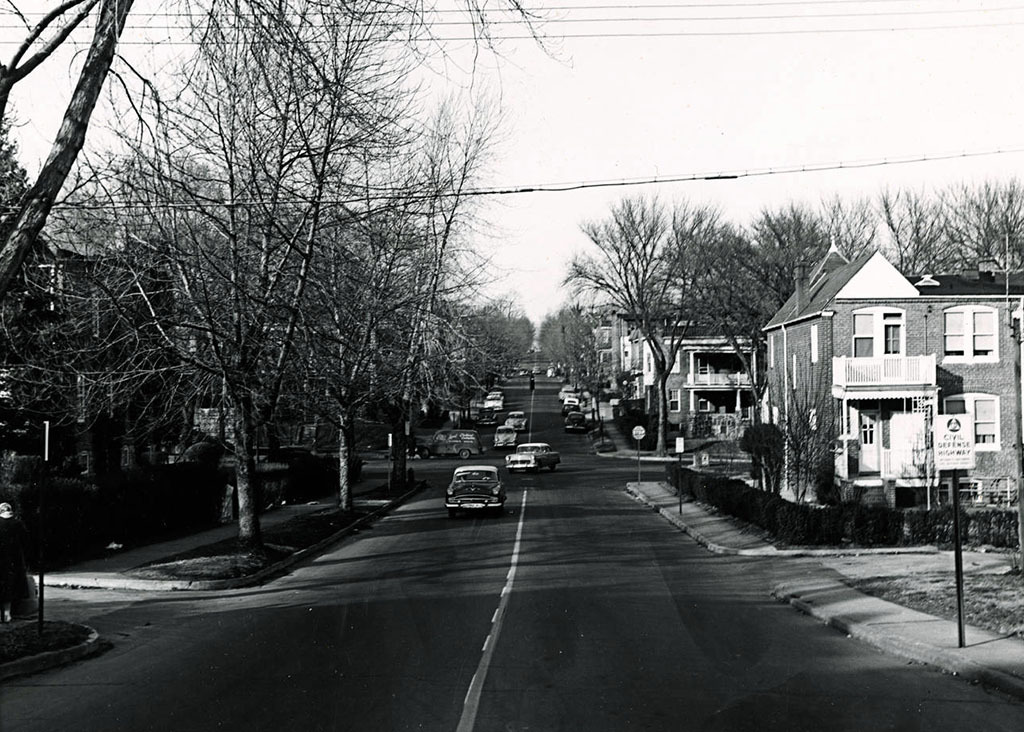
Gwynns Falls Parkway and Hilton Street
Cars travel along Gwynns Falls Parkway at Hilton Street. | Source: Baltimore Streetcar Museum, bcrc001_100 | Date: c. 1955Map
Show Comments